The Tormore Cave Project (Marion Dowd, Robert Mulraney, James Bonsall) were thrilled to hear that our book, “An Irish Civil War Dugout – Tormore Cave, County Sligo: Archaeology, history, memory” has been nominated in the Book of the Year category for the 2026 Current Archaeology Awards in London.
Voting is open to everyone; one vote per device (i.e. you can vote on your iPhone, laptop and PC!). There are four award categories and we are in the fourth one, that is “Book of the Year”. Please note you can vote in the three other categories or just in Books, if you wish.
Thanks for all your support with the book and please consider continuing to show you support by voting for our book!
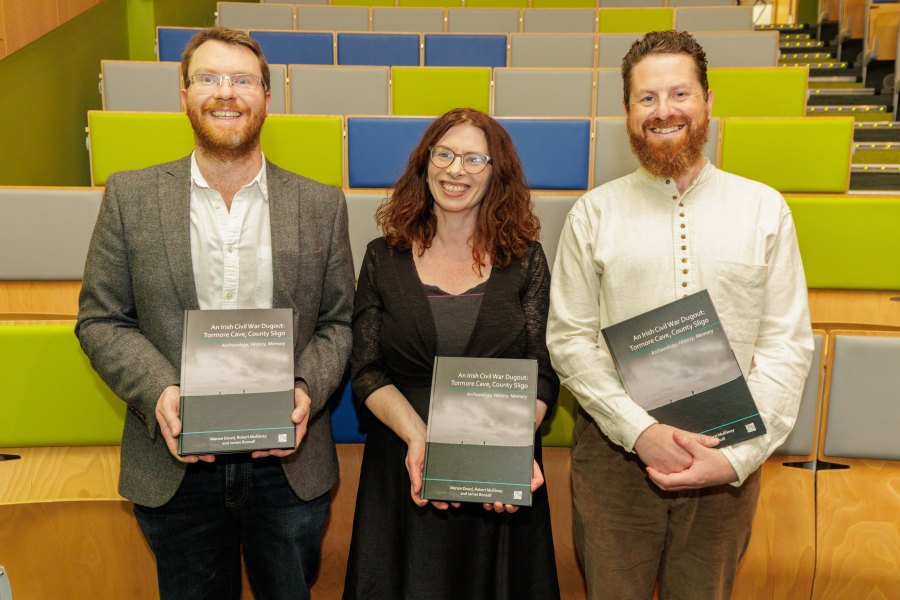
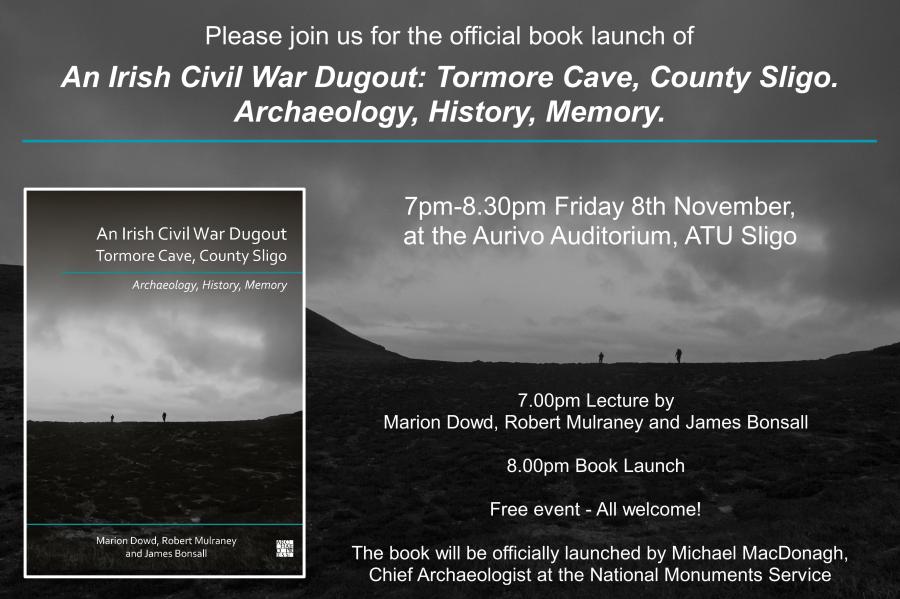
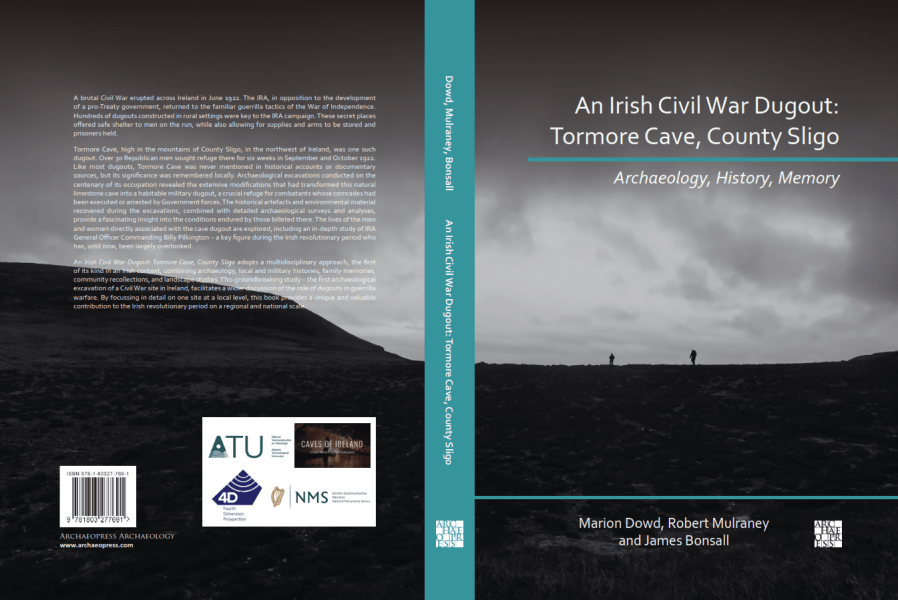
The Tormore Cave Project which, in 2022 saw the release of our book, The Six, is proud to announce the culmination of our efforts, An Irish Civil War Dugout: Tormore Cave, County Sligo – Archaeology, History, Memory. Co-authored by Marion Dowd, Robert Mulraney, and James Bonsall, the book will be launched at ATU Sligo, 8th November 2024. All welcome.
It is almost three years to date when we first visited Tormore Cave, on the back of cherished family memories of the site. It is more than 70 years since Father William Pilkington last visited the cave which had a profound influence on his life. It is also 102 years since Pilkington, as General Officer Commanding of the 3rd Western Division IRA, sought refuge there, along with more than 30 men, for six weeks.
Their retreat was a desperate one in which the new, confident, and uncompromising Free State National Army drove the last stand of Sligo Republicans into the hills and plains of the Dartry mountains. In doing so, they isolated six republicans, likely making their way to the cave hideout, on the slopes of Benbulbin. The men were disarmed and, defenceless, were cut to shreds with Lewis machine gun fire (‘The Six‘). Thirty other Republicans escaped into Tormore Cave, a dugout prepared for the most desperate of events – like those which occurred on September 20th, 1922.
When we – three archaeologists – arrived in late 2021, little was known about the cave, save that retained in local and familial memory. Six months later we conducted a cave excavation (under license of Dr. Marion Dowd, co-author). Two further years later, combining primary and secondary sources as diverse as lithic analysis, zooarchaeology, geological consultancy, military and media archives – published and unpublished, interviews with family descendants and untranscribed diaries and recordings, we can now present a most exhaustive analysis of these otherwise forgotten events.
Our work in its final form is unique – a detailed analysis of what some historians might consider a ‘non-event’, that is, a brief period of reclusive silence at the periphery of the main events of civil war. The protagonists of the story, men and women who were generally not to be remembered, are at the fore. A further man, Fr. William Pilkington, who played a vital role, nationally, at the close of the Civil War, would have been remembered were it not for his intentional self-removal from the story. His first biography is given here. Another unique aspect and a first, is the cave excavation itself – the first Civil War site and, dugout site, to be excavated in Ireland.
There are many strands to this book and it is made for a multitude of interests. Reflecting this, and the fact that we are ultimately at the debt of the community who safeguarded their story, and allowed us to tell it, the publication will be available to freely download, upon the book’s launch.
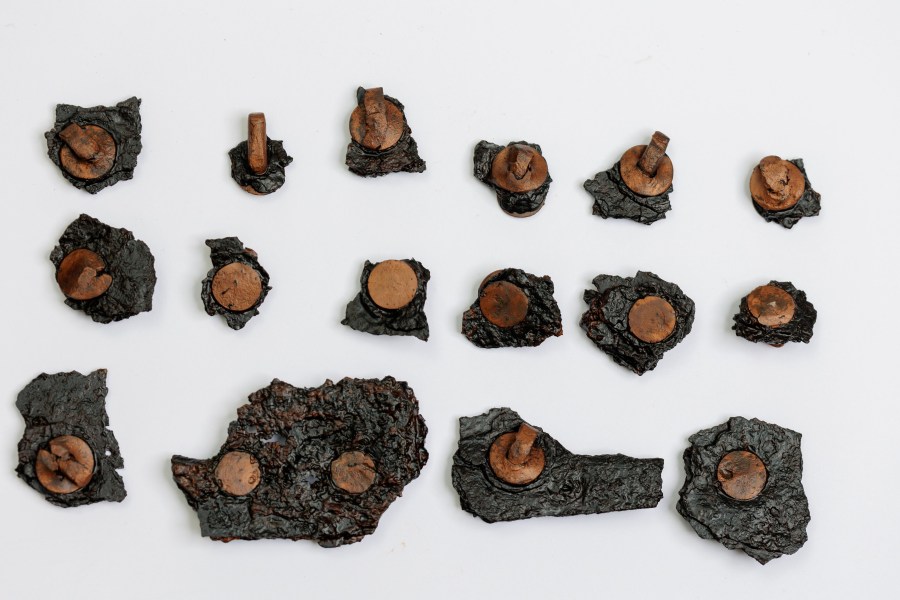
One year later and none the wiser as to what object these 16 copper rivets are from! We discovered these during an archaeological excavation of a cave hideout in County Sligo that was used in 1922 at the height of the Irish Civil War. The copper rivets attached an iron band to something that has now disintegrated. We have ruled out a bandolier and boot soles. We have contacted museums throughout Ireland and Britain, and spoken to numerous colleagues in archaeology and history, but no one knows what the rivets are from!
Copper rivets in iron
Here are our current thoughts:
· reinforcement bands from a field medical supply box
· shrapnel for use in an improvised explosive device
· components of field equipment, such as a field telephone
· bolts from sheeting removed from the recently destroyed Ballinalee armoured car used for bullet-proof pannelling in the cave hideout!
There must be someone out there who recognises these? Please share widely and help us solve the mystery!! Email: marion.dowd@atu.ie or robertmulraney@gmail.com, or contact us here.
Well, I thought it might be time to make a brief update on all-things-Tormore!
For those of you who don’t know, Tormore is a cave located high in the Dartry mountains. Until recently it has been unknown to cavers and the public alike; with its location and memory preserved only in the minds and hearts of a handful of people who have inherited its legacy from their relatives.
For it was in Tormore, one hundred years ago, where over 30 IRA combatants, retreating from a National Army assault that left six men dead – Sligo’s Noble Six – sought refuge, allowing them to outlive one of the darkest and most violent periods in modern Irish history.
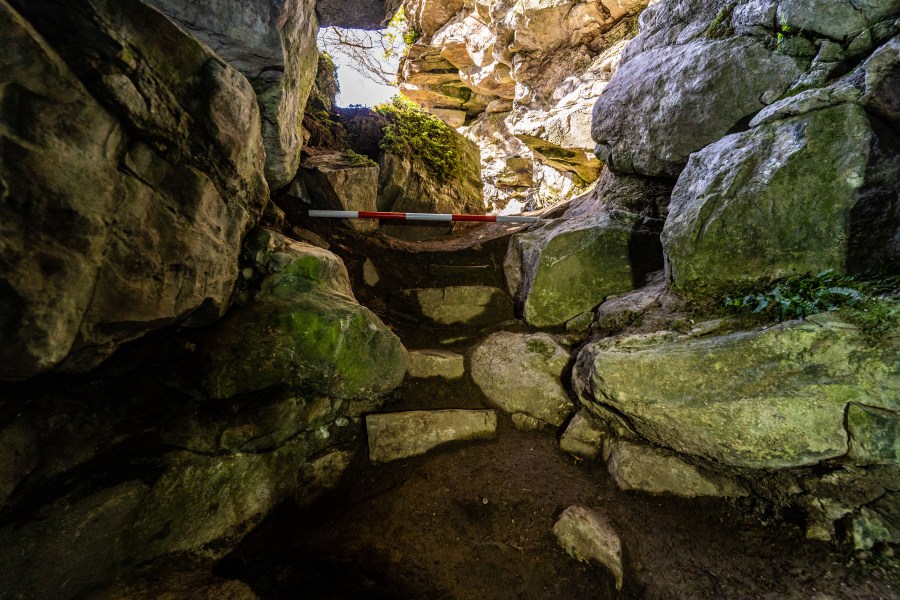
The entrance to Tormore Cave with artificlly placed steps to ease access
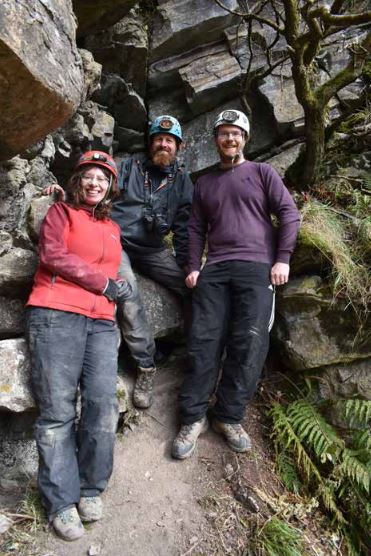
Along with my colleagues, Dr. Marion Dowd and Dr. James Bonsall, I was involved in the licensed excavation of the cave in Spring of this year. Since then we have been working around the clock to process the archaeological data, overseeing specialist consultation in relation to artefacts and ecofacts, conducting interviews with relatives, and researching the almost bottomless military and historical archives.
The results? Well, you’ll have to wait for them!
But in the meantime, we are pleased to announce that we will be publishing not one, but two books!
The first – just ready to leave for the printers – will be on Sligo’s Noble Six, the men who died in controversial circumstances on Benbublin and Benwiskin mountains. The book looks at their lives and at how people have chosen to commeration them since their deaths. The book, The Six, will be released in August. In the meantime a new Twitter page will keep you informed of the story leading up to the events of the story and the release of the book. It can be found at: https://twitter.com/TheSix_Sligo
The second book, due out in November of this year, will described the cave, the excavation, the history and the stories of the men who survived.
This project has been receiving a lot of interest and attention, and featured a segment on the national RTE News, which can be viewed here:
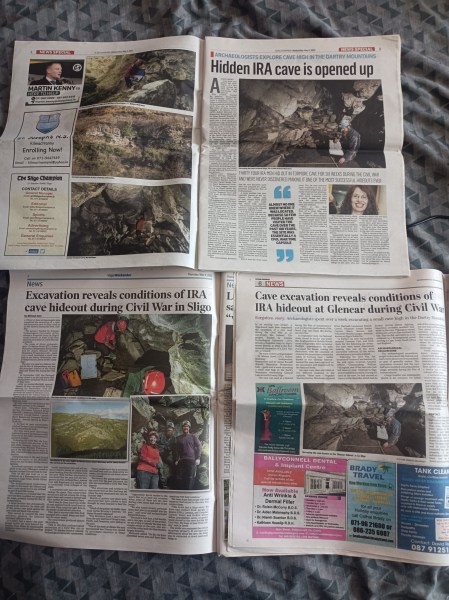
We also featured in many national and local papers also and we are in the current Descent magazine so make sure to get your hands on that!:
Finally, we gave our first public presentation on the project at the University College Cork hosted ‘The Irish Civil War National Conference’, in June. This was a brilliantly organised event, with excellent lectures and events. The presentation was short and in future, I imagine we will have plenty more to say. It is available, along with many other excellent presentations at:

 Caves Of Ireland